Delivering on the promise of science by advancing next generation ADCs
ADC Therapeutics is a commercial-stage global leader and pioneer in the field of antibody drug conjugates (ADCs), focused on driving innovation in ADC development with specialized capabilities from clinical to manufacturing and commercialization. Our proven executional track record includes the first PBD-based ADC receiving accelerated approval from the FDA and conditional approval from the European Commission.
What are ADCs?
Antibody drug conjugates are an established therapeutic approach in oncology. ADCs selectively deliver potent cytotoxins directly to tumor cells, with the goal of maximizing activity in tumor cells while minimizing toxicity to healthy cells.
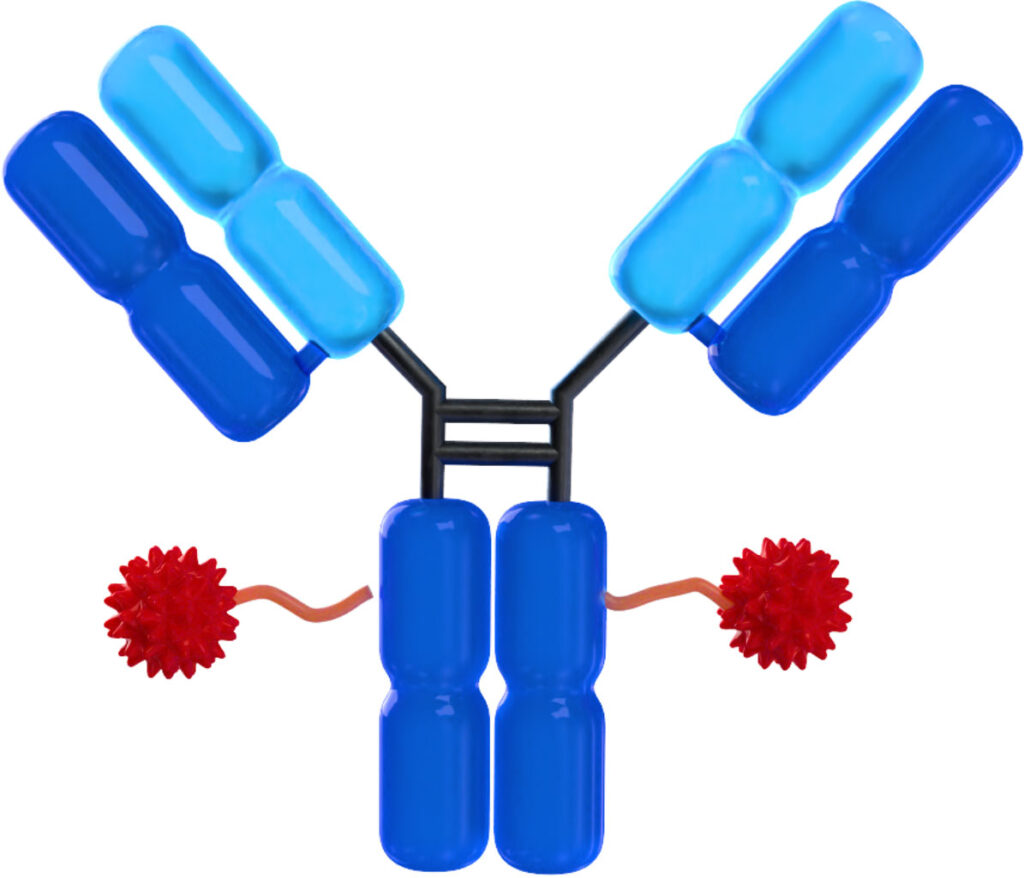
An ADC consists of three components: (i) a antibody that selectively targets a distinct antigen preferentially expressed on tumor cells; (ii) a cytotoxic molecule, often referred to as the toxin or the warhead, that kills the target cell; and (iii) a chemical linker that joins together the antibody and the warhead. The warhead and the linker are together referred to as the payload. The figure below shows the three components of an ADC.
Exatecans belong to the family of camptothecins, which are naturally occurring pentacyclic quinoline alkaloids that bind to DNA topoisomerase I, inhibiting DNA relegation and finally causing apoptosis. Campothecin, such as exatecan, therefore possess high cytotoxic activity against a variety of tumors.
PBD dimers are highly potent and bind irreversibly to two guanines from opposite DNA strands in the minor groove of DNA without distorting the double helix, potentially evading DNA repair mechanisms. The interstrand cross-links block DNA strand separation, disrupting essential DNA metabolic processes such as replication, and ultimately result in cell death. These interstrand cross-links persist in target cells and can lie dormant, potentially for weeks, which may contribute to the frequency and durability of responses in heavily pre-treated and primary refractory patients that we have observed in our clinical trials with PBD-based ADCs.